Key takeaways
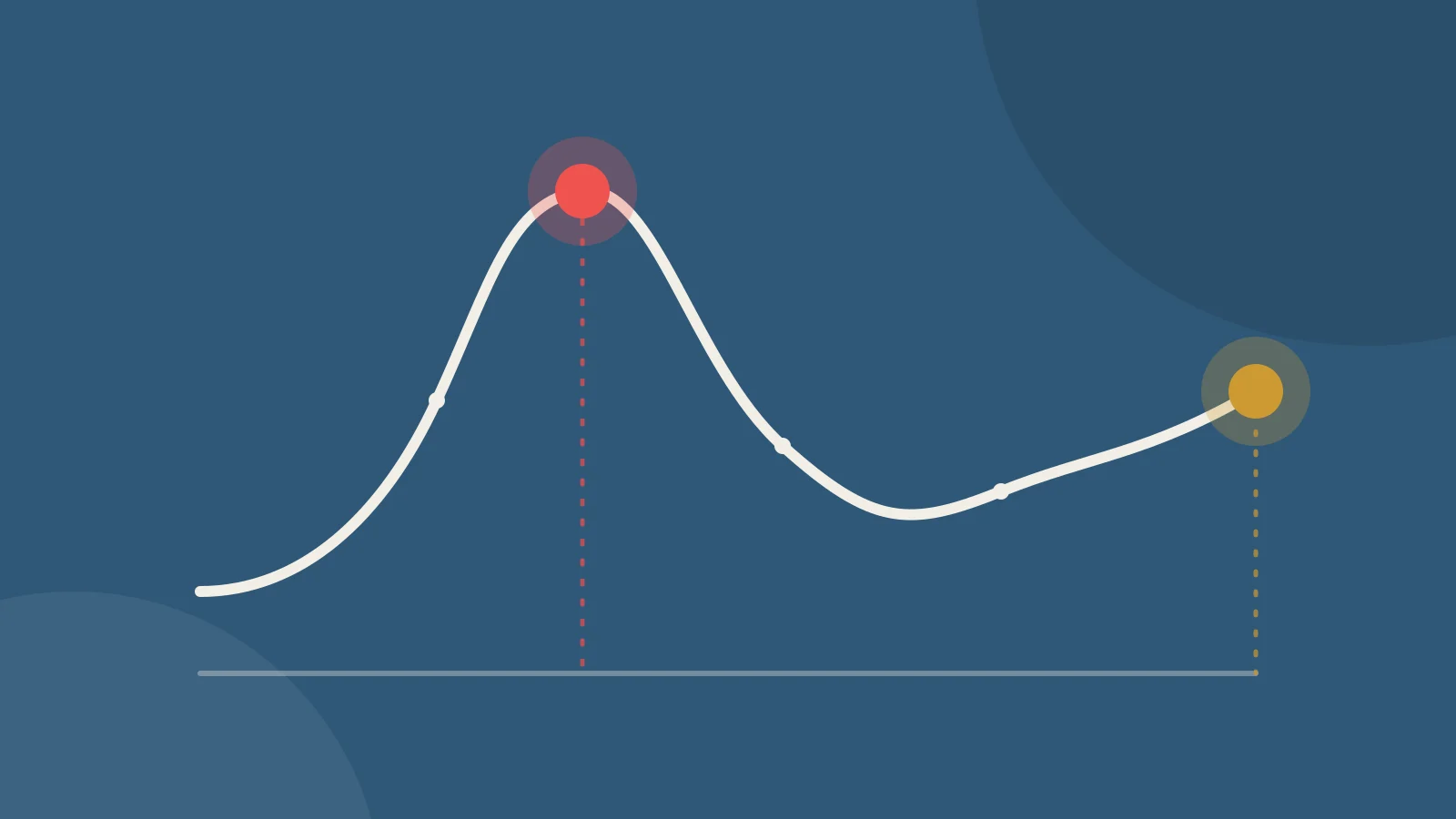
Look closely at the most intense moments and the final moments of a user journey.
Find the moments when the product is most helpful, valuable or entertaining, and make them better.
People remember unpleasant moments more vividly than pleasant ones.
Origins
The key evidence was published in 1993 by the psychologists Daniel Kahneman and Barbara Fredrickson, with Charles Schreiber and Donald Redelmeier. Participants held a hand in 14 °C water for 60 seconds; in a second trial they held the other hand in 14 °C water for 60 seconds and then for 30 more seconds while the water was warmed slightly to 15 °C. Asked which trial to repeat, most chose the longer one, although it contained more discomfort, because its ending was less unpleasant and the memory of it was better.
In practice
- Make the end of a flow count: a clear confirmation, a thank-you, a next step.
- Fix the worst moment first; it weighs more than many small improvements.
- Add one small moment of delight at the high point of the journey.
Further reading
- The Peak–End Rule: How Impressions Become Memories — Nielsen Norman Group
- What is Peak-End Theory? A Psychologist Explains How Our Memory Fools Us — Positive Psychology
- Peak–End Rule — Wikipedia
- Peak-End Rule on Laws of UX — Jon Yablonski
The illustration is our own, drawn after the idea of this law’s card in Laws of UX by Jon Yablonski.