
Key takeaways
Remove every element you can without harming the function.
Simple solutions are easier to build, test, explain and maintain.
Origins
The principle is named after William of Ockham, an English Franciscan friar and philosopher (c. 1287–1347), although it appears in earlier writing. In its classic form, “entities should not be multiplied beyond necessity”, it asks us to prefer the explanation that needs the fewest assumptions. In design it is a reminder that every added feature, field or step has to earn its place.
In practice
- Audit a screen by removing one element at a time, and see whether anything breaks.
- Prefer a standard control to a custom one, unless the custom one clearly performs better.
- Ask “what is the simplest thing that could work?” before adding a feature.
Further reading
- Designing with Occam’s Razor — Jon Yablonski | Medium
- Occam’s Razor: The Simplest Solution is Always the Best — Mads Soegaard | Interaction Design Foundation
- Occam’s Razor: A Great Principle for Designers — Web Designer Depot
- Occam’s Razor on Laws of UX — Jon Yablonski
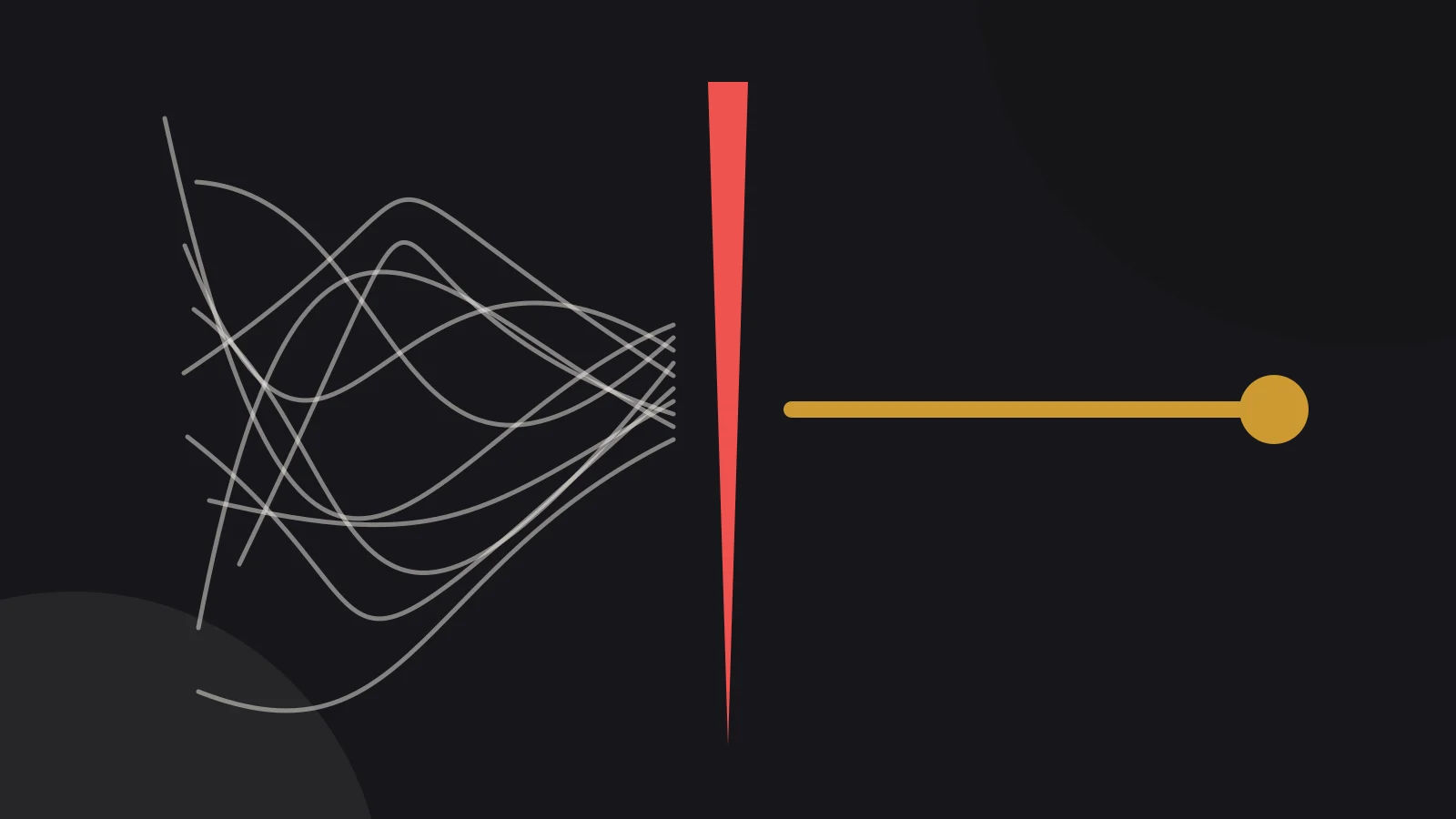
The illustration is our own, drawn after the idea of this law’s card in Laws of UX by Jon Yablonski.