
Key takeaways
Make the elements you want people to see and pick large enough, and put them in plain view.
The law matters most for buttons and navigation design.
Origins
In 1954, while studying the human motor system, the psychologist Paul Fitts found that the time needed to reach an object is proportional to the distance to it and inversely proportional to its size.
According to the law, fast movements aimed at small targets raise the error rate, because of the trade-off between speed and accuracy. Fitts’s Law is one of the most widely applied rules in user experience and interface design.
A real-life example: many designers criticised Apple because the Back button in the iOS interface was small and sat in the top left corner, so a right-handed user trying to hit it often missed. Years later, Apple eased the problem with gestures.
Further reading
- Fitts’s Law: The Importance of Size and Distance in UI Design — Interaction Design Foundation
- Fitts’s Law on Wikipedia — Wikipedia
- Fitts’s Law on Laws of UX — Jon Yablonski
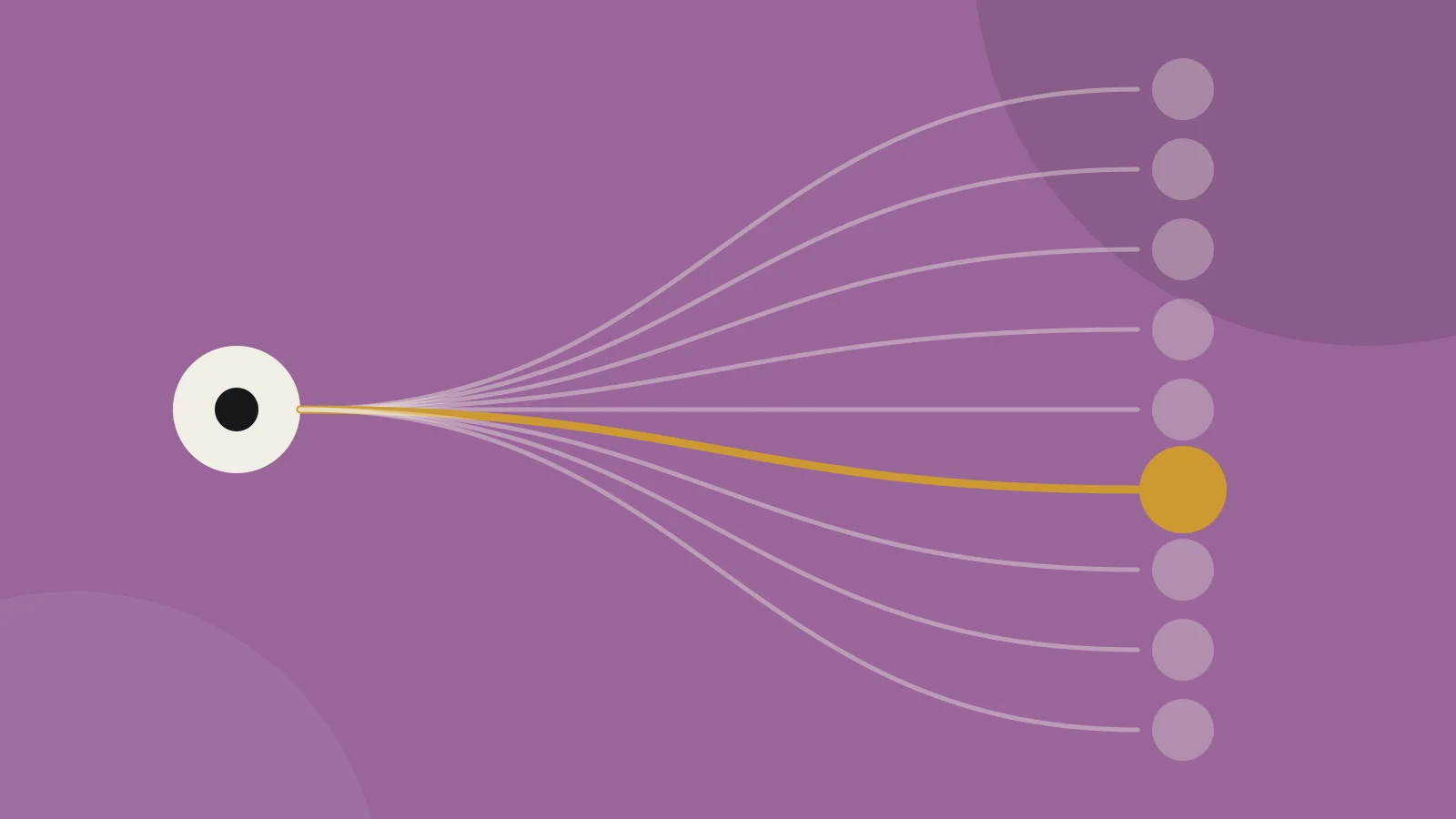
The illustration is our own, drawn after the idea of this law’s card in Laws of UX by Jon Yablonski.